Small Residents of the Riverbank
A tree frog and two spiders from West Java — the riverbank's smallest residents, working as indicators of water quality and controllers of insects.
The riverbank does not belong to birds alone. Its smallest residents — frogs and spiders — work first: one reads the quality of the water through its skin, the other keeps insects in check. Three photographs from this archive, all from West Java, introduce three of them.
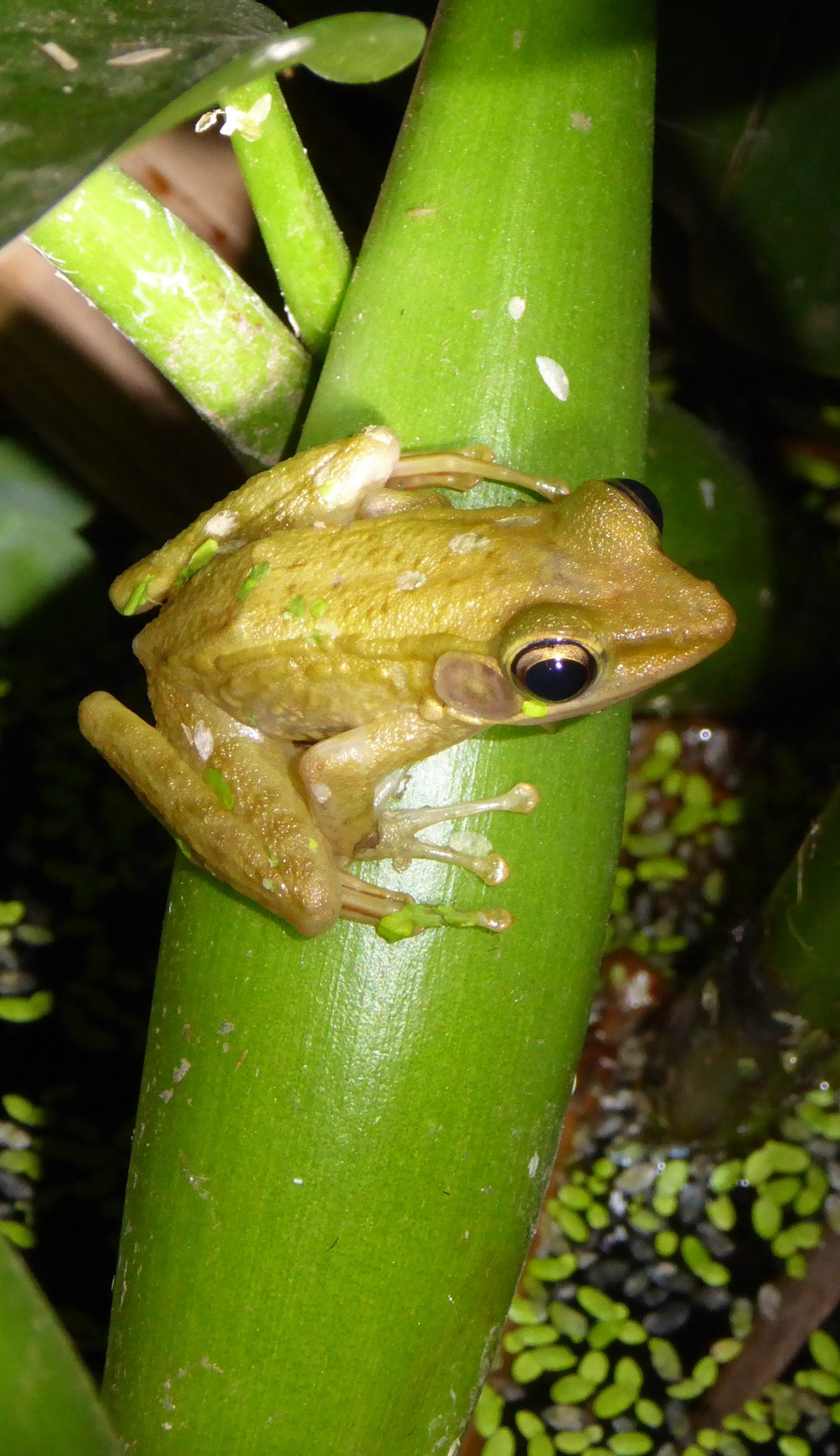
The tree frog in this photograph — believed to belong to the Polypedates group — clings to a green stem above water plants. Frogs lay their eggs in the water or just above it, and their always-moist skin absorbs whatever is dissolved in that water. That makes frogs living indicators of water quality: when frogs disappear from a stretch, the first question is not where they went, but what changed in the water.
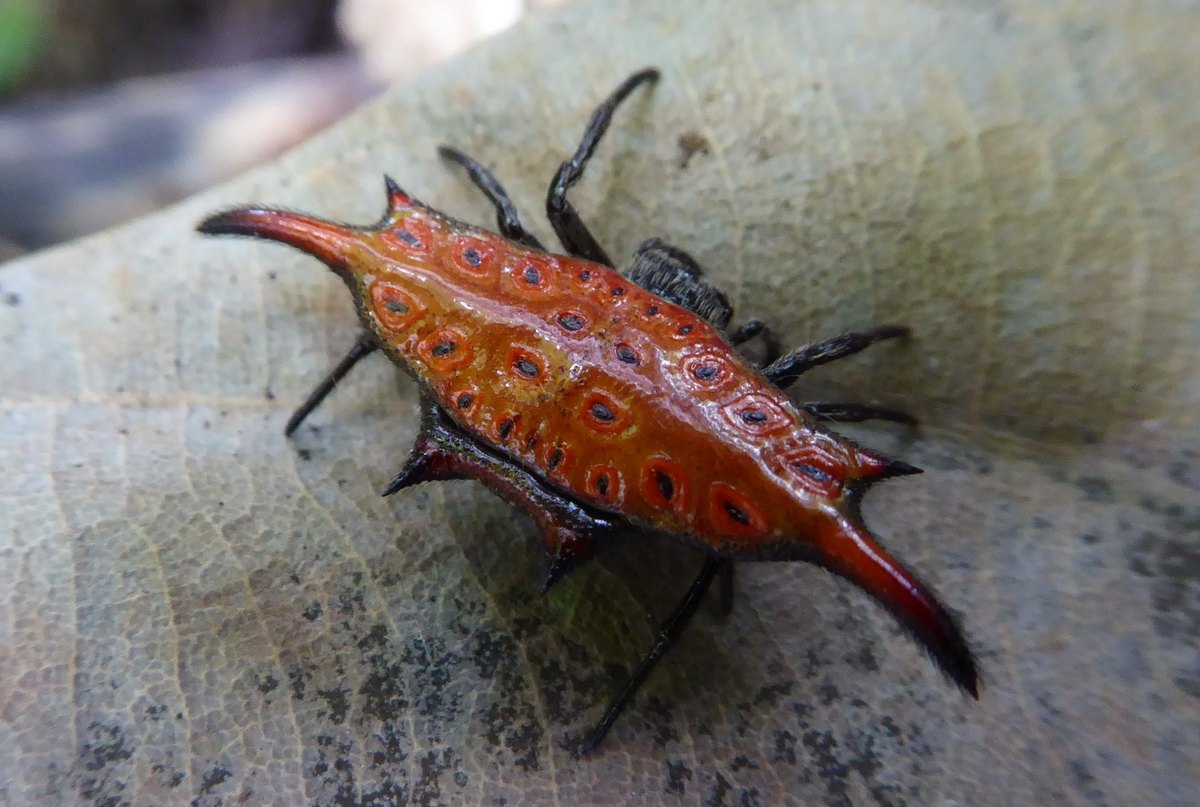
This red spiny orb-weaver (Gasteracantha sp.) rests on a dry leaf, waiting at the centre of its round web. Orb-weavers catch flying insects every day — mosquitoes, flies, and garden insects — at no cost and with no poison. Its long spines and bright colour make it easy to recognise, and it can safely be named to genus level.
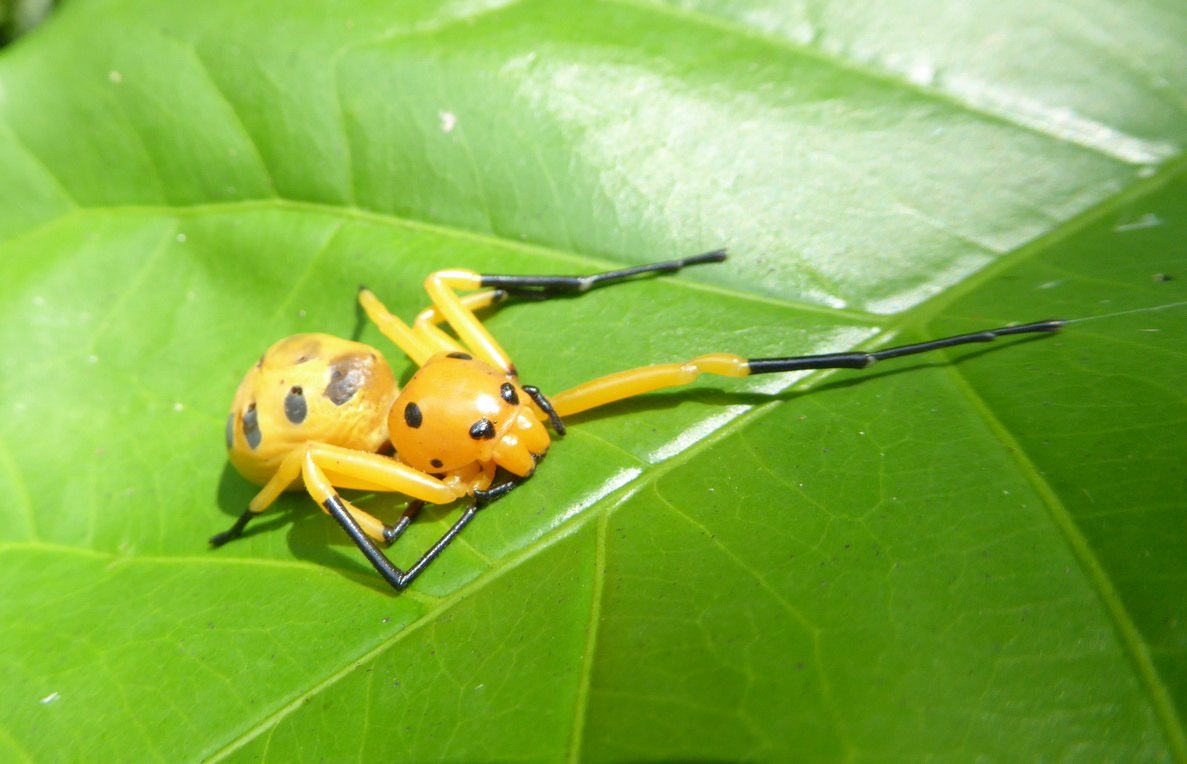
The third resident weaves no web at all. A yellow crab spider — its species name still tentative — lies stretched out on a green leaf, waiting for insects to come within striking distance. This photograph is special to us: its GPS point lies in the Citarum valley, the same river system as our Cipeuyeum stretch — though not at Cipeuyeum itself.
Small residents are easy to overlook because they are small and still. Yet they are the first to feel any change on the bank — long before the birds stop coming. Recording them, like recording birds, is part of the River Calendar. A lush bank is not just scenery; it is a home.